The 2nd Amir UmerAlrida (Sheik Abadir) 1000-1020 and 1065-1066 #
In the history of the Amir’s, Abadir, in the Amir’s lists second. Although the reporters who wrote about this Saint and politicalleader in their different writings mentioned; focused on the documents and issues, which are believed to be the Harari has thought.
In addition the ancient writings namely “Fath Medintel Harar” and “Jadwal Alshash Wal Shami” written in Arabic by Yahya Nesrulah and Ahmed Shami respectively. Thus, Amir Abadir’s history is presented and so categorized in different themes.
First, what many people know and mention as a starting point is the narration about the coming of Sheikh Abadir and his followers to Harar in 1216. As we understand from the narration, Abadir started the social institutions known as Jemaa and an Islamic teaching school ‘Quran Gey’. Many elders had also said that he was teaching together with his follower Sofi Yahya.
There is difference regarding the arrival time of Abadir. The gap was created while changing the hegira calendar to the Gregorian calendar. In this regard, we can see what the History of Harar and Hararis read as follows.
Although “Fatih Medinatel Harar” elaborates the arrival of Umer Al-Rida and the 40 saints in Harar in 1216 (405 Hijira), but evidences confirm that the time that the Shakh arrived Harar was in 1001 G.C. (405 Hijira). The reason for this is the source reference of the European and the Hijira calendar.
Umer Al-Rida was the youngest of all the saints who had remarkable skill and acceptance. He showed numerous miraculous events practically. However, Ahmed Ashami in his book Ashashiwa quoting Belaynesh (1975) states that Amir Haboba’s kingdom was from 283-333 Hijira (944/5-969/7).
Later on the reason why the residents who served the saint guests chose the Sheikh was his role in bringing peace and terminating fighting among the factions of natives of the area. In addition, his successful effort in uniting the natives by deciding Harar his centre and created a system of cultural structures. (The History of Harar and Hararis, 2012).
Based on the first manuscripts and ancient handwritings confirmed, it is possible to surmise that Abadir was not crowned immediately after his arrival in Harar.
Abdullah Buh historian stated the time 388 and 391 converting from 998-1000, which has still two years difference. In this time discrepancy, calculating carefully the time when he came and when he was crowned, it would be more accurate for the profile to take the 1000 year. What is emphasized about the father of Harar, Abadir Umer Al-Rida who rescued Harar and Hararis from their sufferings and grief of that time?
There were other three saints refereed by the same name Abadir, who had been guardian in spirit and a place for religious commemoration. These are Abadir TeyFur, BediAbadir and Abadir Bayezid. (History of Harar and Hararis) Thus, the kingdom of Sheikh Abadir started from 1000 A.L.
The second question is whether the number of people who came with Abadir was 40 or 405. When we look at this point, if we take the number 40, the first things to ask would be are 40 people enough for a country that asked for help. How could this people rescue the city without any modern armaments?
On the other hand, the reason why number 40 is mentioned is after an agreement was reached to establish a government, from the 405 people who came with Abadir, 10 were selected from each 100 number which made that 41 saints were represented. Based on this data Shura, Islamic council was established with representatives from Harar, Argoba and Somali and elected Abadir as Amir in the council’s first meeting. Therefore, based on, understandably, why people who came to Harar with Abadir were surmised as 40.
Moreover, based on their number the calculation in Abjedya (o) =5 + R (α) = 200+L (α) = 200= 405. Added together gives 405 that will be Harar. The naming came next to the saying that it came from the mass of Harla, which was an oral history. Thus, logically it is possible to understand that the exact number of people who came with Abadir was 405.
Eventually, Several of the Din intellectuals Ulamas were ordered to go to a distance place to teach and the grandchildren who were taught by these Ulamas were able to learn Islam by the order of Abadir. Studies indicate that among these Ulamas sent to different places by Abadir, the Ulamas sent to Harar Amba were teachers, Qadis (Judges) There were many who came back accomplishing their tasks, and yet few remained there.
Second, the historian and assistant professor Ahmed Zekaria in his writing on the brief history of Harar (1998) cites the analysis of E. Wagner (1978) and E. Cerruli (1941) that the Harlas, Gaturis and Argobas welcomed Abadir Umer Al-Rida and his friends known as fathers of the Hararis, in the 13th century. (The Harari Rebellion 1992).
Abadir’s Legacy
Omaral Rida did numerous social accomplishments and left his legacy for Hararis and the neighbouring people far and beyond in general. Yusuf Ibn Sharif Mohammed Sufian, in his book ‘Kitab Fat’hul Manaqibal-Imam’ states, Sheikh Abadir ascertained undeniably and irrefutably to Umer that the Sheikh was beyond Hararis. He was recognized in the whole of Abyssinia.
Furthermore, Abadir insisted on the people to consider growth and development and agree to participate in the ‘market economy’ and that they should provide their production and yield in exchange. The town of Harar should be a market centre for raw materials, Milk, Chat, Barley and Coffee. Ever since the era of Abadir, the popularity of Hararis’ fruit to become synonymous and associate him with ‘Abadir Tom Ayasadir’ in Amharic, implying Abadir does not let you pass a night without a meal.
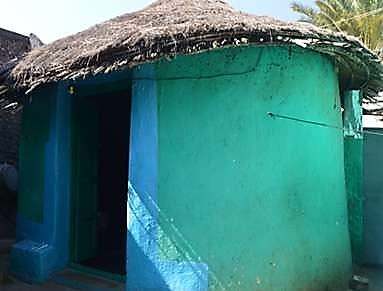
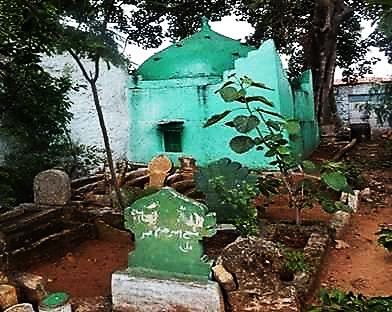
To the contemporary viewer or explorer, the historical city, Harar, bears two designated locations for him i.e., where Abadir resided and where he was buried ‘La’ay Abadir’ (Upper Abadir) and ‘Tahay Abadir’ (Lower Abadir) respectively. In addition to his ‘Maqam’, there is still small hut, where he was believed to be in bliss. His burial place, in addition holds the graves of other Sheikhs as well as the resting place to the late Amir Abdullahi.
Finally, the pious Abadir is attributed for the development of Harar. He disseminated the Islamic faith to the extent that foreigners label Harar the city as, the Fourth Holy city, next to the known three cities: namely, Mekkah, Medina and Beital Maqdas ‘Jerusalem’; this labelling is consistent with the narration of 16th century, 1559 about the place adjacent to the city of Harar named “The land of our lord (Hashim Murtada 2010) and so did he remain with legacy in the mind of people everywhere.
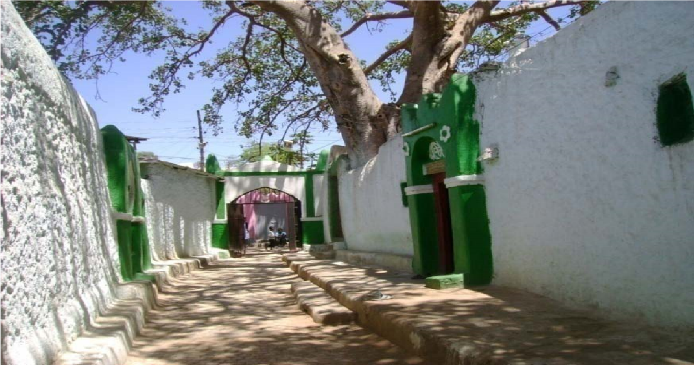
Abadir’s Sainthood
The ancient hand writing obtained from Harar town, and in the article, “Harar Center of Islam in Ethiopia”, written by Enrico Cerulli under the sub-title Saint ShakhAbadir, confirms that Sheik Abadir was a recognized leader even beyond Harar. (History of Harar and Hararis 2012).
Yahya Nusrulah’s “Fateh Medinatel Harar” the Arabic manuscript mentions that Abadir was assigning people in order to strengthen the people around the area and to create economic relations so that the rural people can supply to the city was known as the directive of Abadir’s promise (Ibid).
Among the local authors who wrote about Abadir, the Wolene Sheik’s “Tirone” was mentioned. Wolene Sheik Umer Sheik, who lived 1860-1923, was author of the book was translated. The book stated the political thoughts of Abadir, the Shakh’s humanity and his success are presented as follows:
- Seiduna Abadir and his company were the ones who played a role in making Harar self-reliant, a center of Islam and had all the power to do everything.
- They made the Friday prayer called Juma solat very successful by gathering the public to such prayers.
- Abadir was asked to give justice on conflicts that could occur. He was source of Fetiwa until Tufha Bin Hajor.
- The Sheik’s personality cult was a role model for Morale and Center of Excellence. Tirone mentions the Sheik’s personality as a shelter to the needy, who also introduced the value of entertaining guests that shows how he was bestowed of humane and sympathetic. Since he was a committed religious person, he proved his inner belief and strength through his daily prayer and practical participation of social systems. In generosity he distributed different materials to the poor and widows, etc. which reflects his strong objective to confirm his high-level humane character in solving social problems.
- Abdullah Sheik Ahmed Buh (1998) in his book ‘The history of Hararis and the Harar city’ confirms that Sheik Abadir Umer Al-Rida was a respected saint of Harari. In addition, in the book known as “Fetih Medintel Harar” which is about the history of Harar in the 13th century, a large portion of the narration is about Abadir.
- Ahmed Shami in his book “Jadwal Ash Weshami” mentions that after Abdullah, Abadir became the religious leader and administrator of Harar, he fought with non-religious and idolatrous people and was victorious. Because Shakh Abadir was a beloved person by the Hararis, several praising were presented in the form of poem for him. According to Abdulmalik, the Sheik was known as “Wolyulahi Mukerim” which literally means Honourable saint in all Ethiopian Muslims.
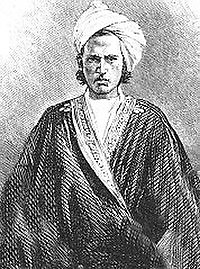
Abadirs Political career
From the political aspect, some documents approved what the Hararis always mention in their oral history that Abadir was Amir twice.
However, the Sheikh was not seen in person in between the years of these two periods of his kingdom. On the other hand, it is possible to speak about an objective reality that a talk about the shakh was touring all over Ethiopia to spread Islam. Here, it is possible to mention some facts these are: –
One memorial place around Gondar shows that he had lived in that area. In actual reality, people do not put memorial for a person they do not know.
In addition, there is an oral history about Abadir around Meqelle. Ayub Abdullah who was once in Meqelle 1984, and had a chance to talk with respected man with wisdom around Mekelle says that there are three evidences that allege Sheik Abadir had lived in Makelle area.
These evidences are:
- The respected man in Meqelle counted his ancestry up to Abadir in detail and it was over 850 years period.
- Most of the Muslims in Meqelle were kins of the son of Shakh Abadir, Ali Abadir.
- Moreover, the tomb of Ali Abadir, presumed to the son of Abadir is located in Mekelle, at the grave of other Muslims.
Feysel Abdihussen the writer tells that, on one hand it could probably be that Amir Abadir travelled from Harar to Gondar, Tigray and similar places by leaving his rank for some time. On the other hand, it could also be his journey to Saudi Arabia (Haji Meka) as he was continuously travelling.
Information sources tell about the celebration of his religious commemoration around Gondar at a specific place called “Shehaba Idris”.
In conclusion, the Amir was religious man, teacher, public co-ordinator, courageous and effortful in bringing the rural area and the cities together to live and support each other for common goal, humane and sympathetic. Moreover, he was also leader for cultural development, religion and politics of Harar, particularly; he was the legend of the Harari people and the rest of the Ethiopia, he was a highly beloved Amir of Harar.
Abadir the Unifier
Abadir had been a respected administrator of Harar. As a considerate leader of the era. Abadir gathered the surrounding people of Harari (Harla), Somali, and Argoba and proposed to them the excellent opportunity, to elect their leaders by assigning quotas to form their parliament. Subsequently this parliament elected Abadir to be their Amir. It was through integrating the local tribes, to bring them together under common share of influence that Harar began to develop as a city. For this and other reasons the first entitlement and respect as a holy-man has given to him.
Abadir unified the Harla people, in the then, Federalism and encouraged them to become competent leaders; oriented them to conflict resolution in reconciliation. The Sheikh had facilitated the favourable condition and realistic situation for development and aspiration to attain advanced civilizations.
Accordingly, the first ‘Awach’ (Islamic Shrine) in Harar has been established in his name, though some claims there are a few before him. Here Islamic education was given, as well as, propagated; the poor were supported, politically and socially, the ‘Murid’ (head) of the Awach bore the authority of approving the newly declared Amir, in the process called ‘Taj Matalal’ (coronation), as well as, the responsibility of assigning Murids to other Awachs. Aw-Abadir could be characterized, as a leader, Holy man and precious asset of the country. Although; the arrival of Sheikh Abadir from Hijaz, which was mainly intended to support and save Harar from the conquering force of Portuguese, he undeniably did much in the way of consolidating practice in the area and strengthened its historical role amongst the people. (Arabic manuscript)
Abadir the 3rd Amir (Abadir ruled for the second time) The leader, the unifier and the Saint Abadir ruled Harar from (1001 – 1020) and again for the second time in 1065 as reformist. A few of his identifying names are Sheikhal-Balad (Sheikh of Country), ‘Imam al-Mueminein’ (Head of believers), ‘WaliyuAllahi Mukarram’ (the respected holy man) etc. He was a great Islamic humanitarian worth, to be elected as Amir by his followers. .
Finally,the pious (Holy-man), Abadir, known by numerous names to describe and reflect his character, competency and generosity. As an accomplished leader, Shakh Umar Shakh Bashir, the Walene’s Shakh, further tells that people come from near and far with gifts, cattle, edible materials, incense and perfumes; however; these gifts were passed over to the poor and the miserable. He always favoured the poor and the impoverished. The great leader, Abadir, geographically divided the Harar Sultanate into five parts and each part was provided with Qur’an schools. Harari culture learning centres. Yahya Nesrulah in his book, ‘Fath Medinatl Harar’, states Abadir assigned leaders for nationalities and strengthened the relation with Harari neighbouring people economically, to ensure that the rural sectors produced the necessity for the city, in the pledge known as ‘Abadir Rubut’.
Src: AHMADAS-SAMI, Jadwal as-Sas was-Shami, Addis Ababa, IES ms. 276; EWALD WAGNER (ed, tr, comment.), Legende und Geschichte. Der ‘Fath Madinat Harar’ von Yahya Nasrallah; Wiesbaden 1978 (Abhandlungen für die Kunde des Morgenlandes 46, 3); ID,“Arabische Heiligenlieder aus Harar”, ZDMG 125, 1975, 28–65, here 47–58;ID, “Eine Liste der Heiligen von Harar”, ZDMG 123, 1973, 269–92, here 271; RICARDO DE SANTIS, “Piccoli testi harari”, RSO 18, 1940, 386–97, here 397.
Lit.: RUDI PARET, “Eine fragwürdige arabische Chronik von Harar”, in: PICES 4, 1, 421–43; Ewald Wagner, “Die Chronologie der frühen muslimischen Herrscher Athiopiens nach den Harariner Emirslisten”, in: BRIGIT- TA BENZING –OTTO BÖCHER –GÜNTER MAYER (eds), Wort und Wirklichkeit. Studien zur Afrikanistik und Orientalistik Eugen Ludwig Rapp zum 70. Geburtstag, vol. 1, Meisenheim 1976, 186–204; ID., “Genealogien aus Harar”, Der Islam 51, 1974, 97–117; RICHARD FRANCIS BURTON, First Footsteps in East Africa or an Exploration of Harar, vol. 2, London 1894, 14; PHILIPP PAULITSCHKE, Harar. Forschungsreise nach den Somâl- und Galla-Landern Ost-Afrikas, Leipzig 1888, 218; LUIGI ROBECCHI-BRICCHETTI, Nell’Harrar, Milano 31896, 131–35; ID., “Ricordi di un soggiorno nell’Harrar”, Bollettino della Società geografica italiana 28, 1981, 23–45, here 43ff.; ENRICO CERULLI, Studi etiopici, 1: La lingua e la storia di Harar, Roma 1936, 48ff. [repr. in: ID., L’Islam di ieri e di oggi, Roma 1971, 321ff.]; ID., Etiopia occidentale. (Dallo Scioa alla frontiera del Sudan). Note del viaggio 1927–28, Roma 1930 (Collezione di opere e di monografie a cura del Ministero delle Colonie 6), 129 f; EMILE FOUCHER, “Une Inscription hindi au sanctuaire de Sheikh Abadir (Harar)”, QSE 5, 1984, 96–99; EWALD WAGNER, “Abadir Umar arRida”, in: DicEthBio 1. Ewald Wagner.