
wedding celebration eventually summarized pre-Belechu, belechu and post belechu. As task of Afocha in wedding with Moulud and Zikr. The idea behind the Harari thinking tahsibot two events that are unavoidable are the event of death and the event of marriage. and so the phrase is mutwa belechu. Balachu (Harari Wedding) marriage and death are realities to everybody universally, although their actualization differs in every respect to establish culture collectively and socially. Accordingly, in Harari context, afocha discharges responsibility of the wedding ceremony in myriad events and episodes and the noteworthy details, yet; this discussion is determined to major events highlighted to the public exposure.
Balechu Wedding events are to the detail hold about 17 events interalia comprise; kusha-chat (the proposal chat), zegen (engagement and dowry), selit, (mothers honey ball seed) ayachkarabu (mother’s ritual day), anqermahtab (the grand Saturday dancing), Mawlud (fathers Zikr in praise of the prophet), arouzmegba’ (the proper wedding), arouzmewta’ (emerge from honeymoon) go upto and including guftamogud. Categorically, however, fall under two headings, i.e, pre-wedding and post-wedding.
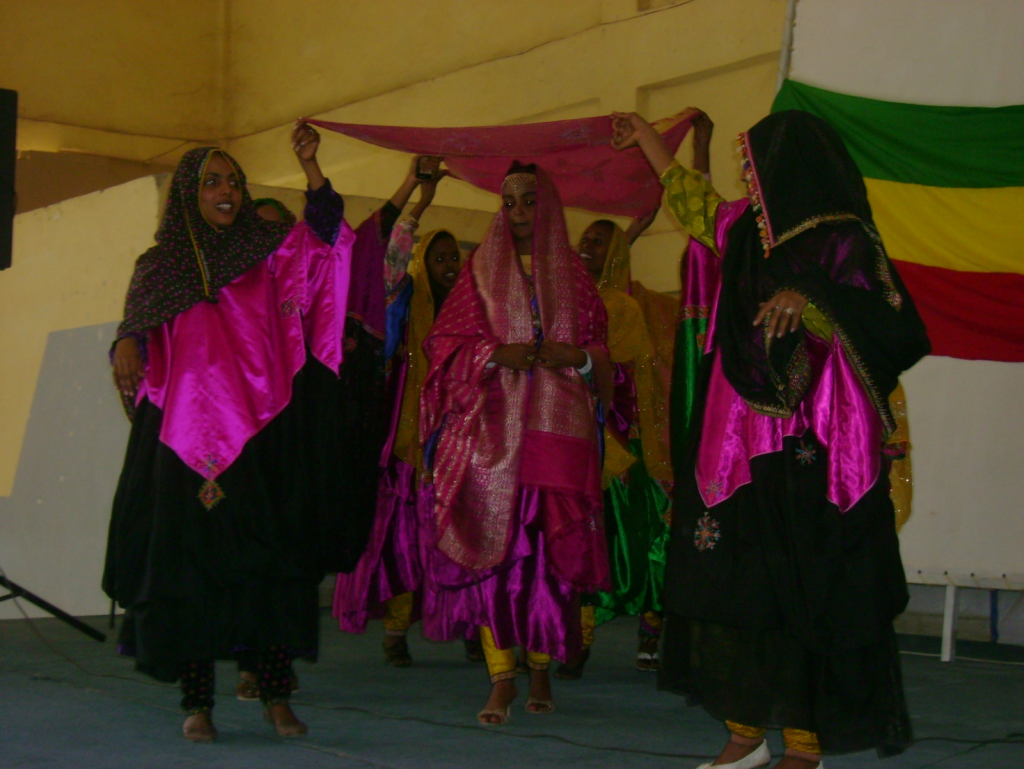
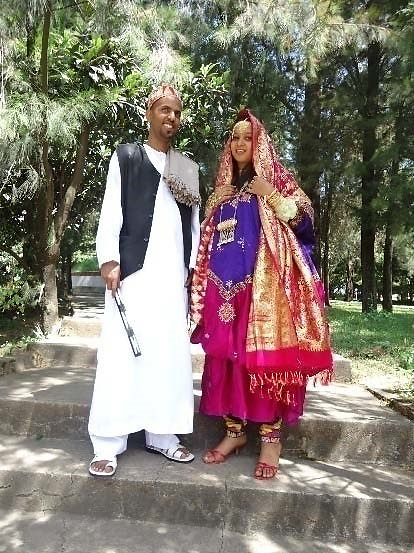
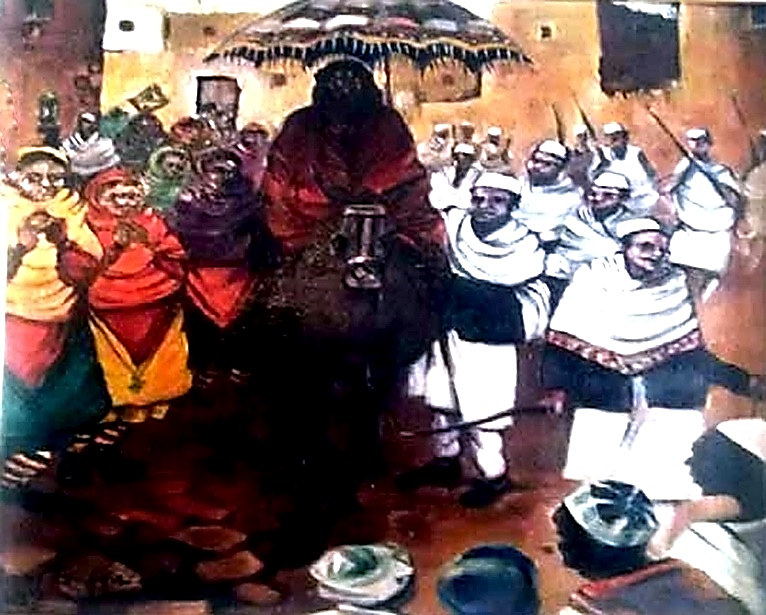
courtesy Painting by Tibebe Terfa,
(Source Abdushakur Badri)
Mohammed Abdurrahman narrates, “At the request of the boy’s (bridegroom) to be family, the girl’s family (prospective bride) appoint the date for the presentation of zegen (engagement). On the eve of the appointed day, the boy’s family accompanied by relatives and outstanding men of the neighbour-hood, solemnly proceed to the girl’s house, where they are cordially welcomed” (Mohammed Abdurahman, 1953). On the zegen day, procedurally the first activity that takes place is the official request by the bridegroom’s group the hand in marriage of the other party’s daughter, mentioning the name, as a bride for their son, again mentioning his name. After the two parties reach the consent, the Qadi would announce the engagement of the brides from the two families. Then a representative of the bridegroom’s group would forward the gifts (chat, ring, clothes, money and sweets).
The sooner the date approaches both families send invitation to kith and kin.by the process of arouz mawalal (bridal tour). Ayach karabu on Saturday morning, Zegen karabu in the afternoon and when the darkness falls down the Anqer mahtab will take place by the mothers and youngsters respectively. The other activity, that takes place on the Saturday night called tunsus, which heralds the commencement of the ceremony. Thus, the invited young men come in-group playing both modern and traditional songs mainly praising the bride and bridegroom as well as their parents and relatives plus friends.
On Sunday morning, the main afocha (men’s) discharges its duties separately. The guild [afocha] members and other men pass the day in reading aloud the [Mawlud] Biography of the prophet. Drum beaten with Zikri and dabal throughout the morning session to terminate at lunch. Then after, lunch will be served for both invited guests as well as the poor. In the afternoon, right after the bride groom comes with his friends behind the elders to collect accompany the bride. The elders of two sides sit in line face to face to be followed by blessing and witnessing the legality of the marriage. The ceremony concludes as the bride accompanies the waiting bride groom and departs with her to their new home, along with basic furnishing materials: Pillows, basketry carpets etc. This is called Aruz magba.
In the olden days, the situation was different. The bridegroom would stay at home and his friends will go to the bride house with decorated mule and put the bride on the back ofmule. Her brother shading her with umbrella would accompany her on the right. The bride’s friends at the back singing Aw-Qahatey (Oh the daughter of honoured father) and the bridegroom’s friends in front dancing named dabal, lead to the bridal house (Aruz-gar) to hand her over to the bride groom who was anxiously waiting for her. “The married couple spend their day swarmed by their friends, and occasionally, are paid visit by bride’s girl-friends” (Muhammed Abdurahman, 1953). On the next morning, her close friends (Hinna–gelach) visit her in order to congratulate her new life by bringing her cosmetics and suitable clothes. The occasion is known as Baqal mouz. Mohammed Abdurrahman in the same article deliberates the last events following the wedding day. The bridegroom’s friends take a calf to bride’s house and make it bray that declares that their daughter is virgin and raised with modesty and cultured. Inaay gabata the plate to the mothers, two big black wooden plates filled to the brims with thin wheat bread steeped in liquid butter and sprinkled with sauces called Waqalim hail the second morning from bride’s family. The ‘Inaay gebeta’ partially goes to boy’s family and respected guests and neighbours enjoy the ‘Inaay gabeta’ in traditional service in anticipation. On Wednesday bridegroom’s relative’s daughters bring sweets and the bride’s side boys bring halva in a trough which both called abba-matora.

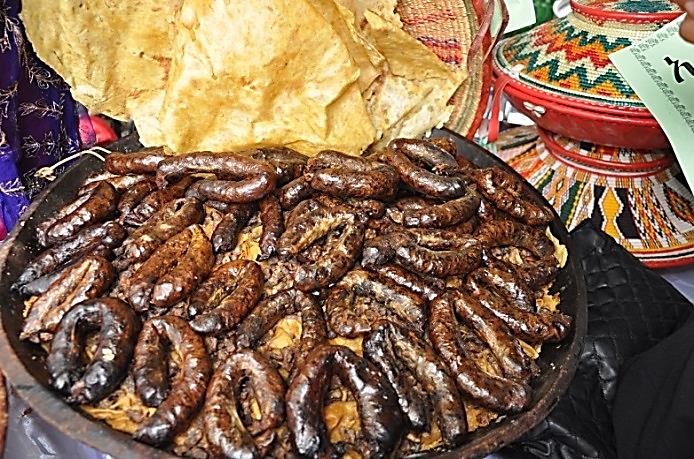
Thursday is the arouz mawta’ day (end of bridal days) and among the events that follow, the gufta mogad ceremony is unique to the Hararis. A bride surrounded by her friends and parents, the house cleaner sits on stool and bends to hairdresser in arouz gars ceremony. As soon as the operation starts, the chorus begins in songs in accordance with the actions, when the dresser divides the bride’s hair along the centre of the head. Then combing and so tying the hair with string, signifying and instructing the bride on her forthcoming life. Accompanied by music and songs in ‘memsas and melhad’, the bride is oriented to the new objective reality in family responsibility. “The Harari balechu from the Zegen karabu up to the arouz mawta’ takes place traditionally for a maximum of eight days (Thursday to Thursday) and if in moderation, four days (from Saturday up to Tuesday)


